.png)

Timber Windows Bristol: A Guide to High-Performance Architectural Glazing

Updated: Jul 18
The very material you might fear will warp or rot in the damp West Country climate is often the most stable, high-performance choice for your home's thermal envelope. It's understandable to feel hesitant about wood when you're aiming for a low-maintenance lifestyle. You want the authentic, sophisticated aesthetic of timber windows Bristol is known for, yet you need a solution that won't require a paintbrush every few years.
We agree that a window should be a permanent investment, not a recurring chore. This guide will help you navigate the complexities of high-performance architectural glazing, ensuring your project achieves both visual harmony and exceptional thermal efficiency. We'll explore why engineered timber outperforms traditional joinery, break down the latest U-value requirements for Building Regulations, and explain how modern manufacturing delivers a sixty-year life expectancy. By the end, you'll have the clarity needed to choose a system that protects your home whilst enhancing its architectural value.
Table of Contents
The Architectural Appeal of Timber Windows in Bristol Homes
Bristol’s skyline is defined by its rich architectural heritage, from the grand Georgian crescents of Clifton to the ornate Victorian terraces of Redland and Montpelier. For homeowners in these areas, choosing timber windows Bristol isn't just about maintenance; it's about preserving a specific historical narrative. High-performance timber windows represent the pinnacle of this preservation. They blend the timeless, natural beauty of wood with precision engineering that meets the rigorous demands of high-performance architectural glazing. This isn't the drafty, single-paned joinery of the past. It's a sophisticated system designed for the future.
Beyond the aesthetic contribution to a streetscape, wood offers a tactile warmth that synthetic materials cannot replicate. This connection to nature, known as biophilic design, is proven to reduce stress and improve well-being within the home. We've seen a decisive shift away from "standard" local joinery towards engineered systems. Brands like Rationel Timber Windows have redefined expectations, offering the character of wood alongside industrial-grade durability and airtightness. This transition ensures that your home remains a sanctuary of comfort, shielded from the damp Atlantic winds that frequently sweep across the Severn Estuary.
Creating a truly curated home involves balancing these high-performance architectural elements with fine interior details; to learn more about the impact of historical design and colour, visit Nicholas Wells Antiques.
Timber in the Bristol Landscape
In conservation areas like Clifton, timber is often a non-negotiable requirement for planning approval. The local council prioritises materials that respect the original fabric of the building, making high-quality wood the gold standard. However, modern Bristol isn't just about the past. Across the South West, we're seeing an increase in "eco" new builds that utilise timber for its low thermal conductivity. The timber windows Bristol residents choose for their renovations must now work harder than ever. These projects must balance traditional looks with the 2026 building performance standards, where U-values are becoming significantly more stringent. High-performance timber allows a property to look like a classic Bristol home whilst performing like a modern passive house.
Sustainable Glazing and Environmental Impact
Timber is one of the few building materials that naturally sequesters carbon. Whilst uPVC and aluminium require intensive energy to manufacture, wood stores CO2 throughout its lifespan. This makes it a primary choice for environmentally conscious renovations. The key is ensuring that the timber is sourced from responsibly managed forests. Choosing FSC certified timber windows ensures that for every tree harvested, more are planted, maintaining the ecological balance. This lifecycle approach, combined with a sixty-year life expectancy, makes timber a truly permanent investment for a sustainable future.
Engineered Timber vs. Traditional Joinery: A Performance Comparison
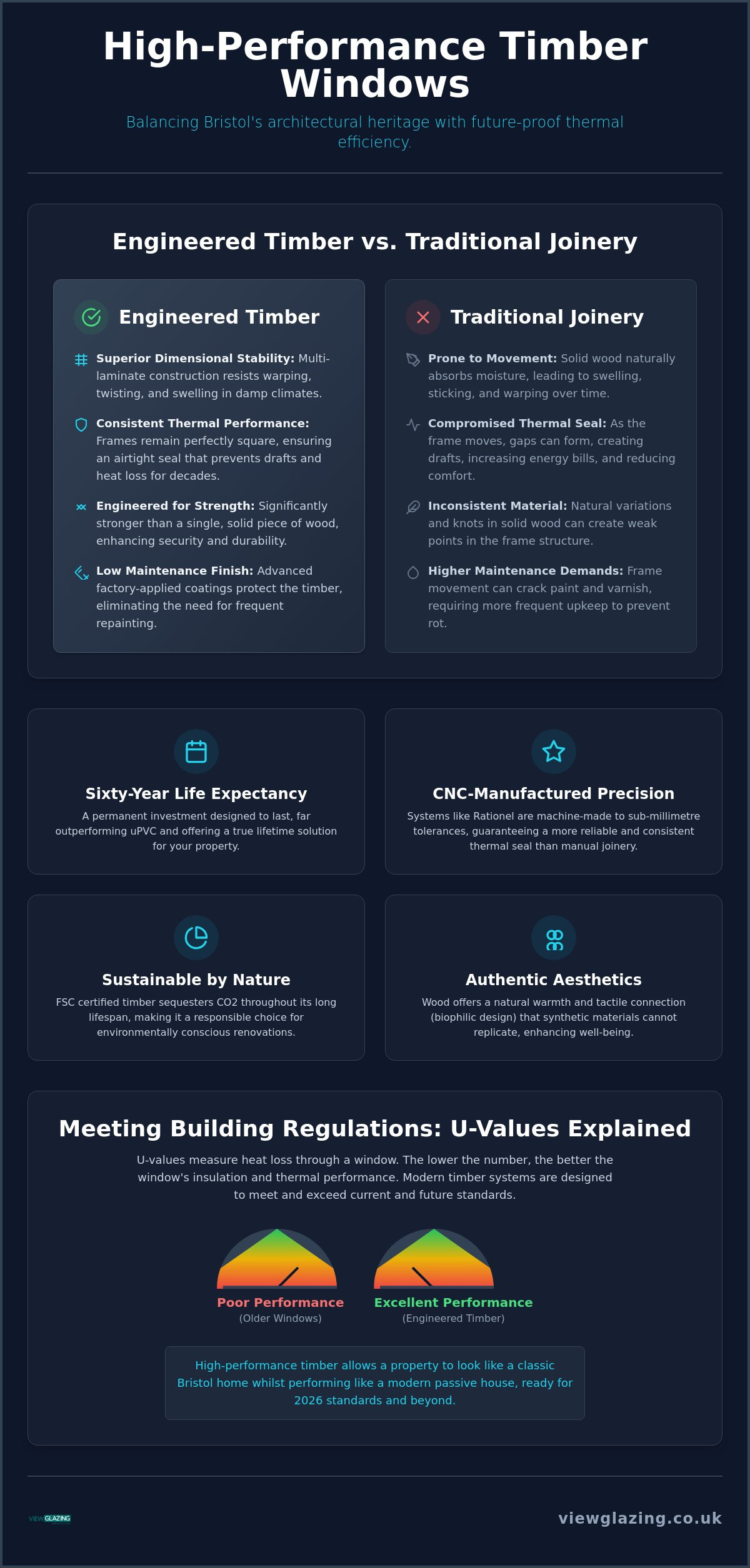
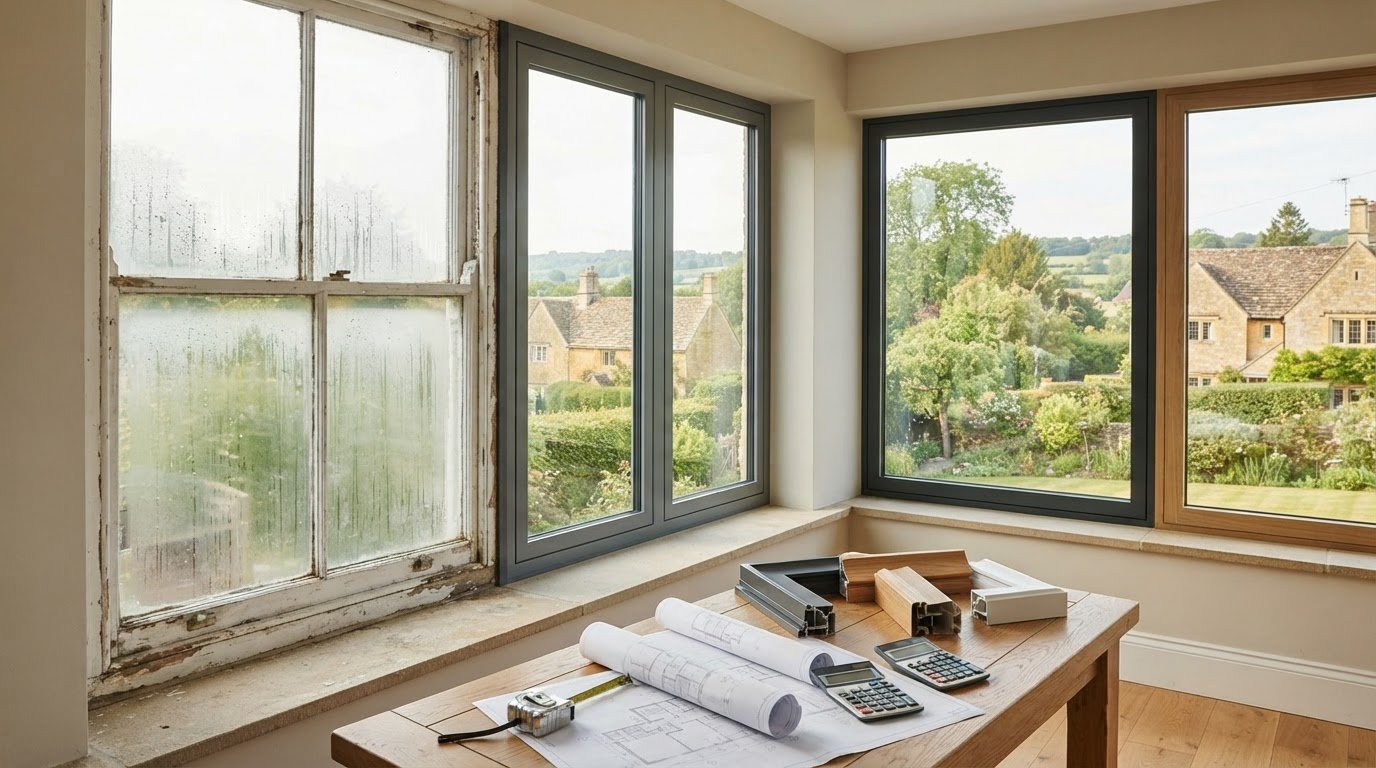
The primary reason many homeowners hesitate to install timber is the memory of old, swollen frames that stick in the winter and rattle in the summer. Traditional joinery relies on solid sections of wood. Because wood is a hygroscopic material, it naturally absorbs and releases moisture from the air, leading to significant dimensional changes. This movement is the enemy of performance. When specifying timber windows Bristol property owners should understand that modern engineering has solved these age-old frustrations through the development of engineered timber. This material isn't just a piece of wood; it's a structural component designed for architectural precision.
Engineered timber consists of multiple layers of wood, known as laminates, bonded together under high pressure. This process creates a frame that is significantly stronger and more stable than a single solid piece. In a high-moisture climate like the South West, this stability is vital. It ensures that the window remains perfectly square within the aperture, allowing the locking mechanisms and hinges to operate smoothly for decades. Achieving the rigorous levels required for Meeting Performance Standards in thermal efficiency is only possible when the frame doesn't warp or twist away from its seals.
Why Stability Matters for Longevity
Engineered timber is a high-stability laminate designed to resist the UK’s fluctuating humidity. By bonding these layers with the grain running in opposing directions, the internal stresses of the material are neutralised. If one layer attempts to expand, the adjacent layers restrain it. This multi-directional grain prevents the "sticking" common in old windows and protects the integrity of the weather seals. Over time, a stable frame prevents air leakage, ensuring your energy bills don't climb as the windows age.
Factory Finishes and Maintenance Cycles
The difference between a factory-applied finish and on-site painting is profound. In a controlled factory environment, timber is treated and coated before the glass is fitted, ensuring every hidden surface is protected. High-performance systems use micro-porous paints that act like a technical fabric; they allow moisture vapour to escape from the wood whilst preventing liquid water from entering. This technology extends maintenance cycles significantly. Whilst traditional paint might require attention every few years, modern factory finishes often go ten years or more before needing a simple top coat. These finishes preserve the natural grain and colour of the wood, ensuring the windows look as striking in a decade as they do on installation day. If you're unsure which finish suits your property's orientation, it's often helpful to discuss your specific site conditions with a technical specialist.
Comparing Timber Window Systems: Rationel vs. Bespoke Solutions
Selecting the ideal system for timber windows Bristol projects often involves a strategic choice between industrial precision and artisanal craftsmanship. Whilst both approaches have their merits, the performance gap between modern manufactured systems and traditional manual joinery has widened significantly. High-performance systems like Rationel utilise advanced computer-controlled (CNC) manufacturing processes. This technology ensures that every joint, rebate, and seal is cut to a tolerance of less than a millimetre; a level of consistency that is virtually impossible to replicate by hand in a local workshop.
This precision directly influences the cost-to-performance ratio of your glazing. Most manufactured systems primary use sustainably sourced softwoods, such as pine or spruce, which are engineered for stability. When combined with factory-applied finishes, these species often provide better thermal insulation and longevity than many solid hardwoods. Additionally, manufactured systems are designed to accommodate high-spec triple glazing with ease. This allows homeowners to achieve U-values that far exceed current building standards, ensuring the property remains exceptionally quiet and thermally efficient regardless of the weather outside.
Rationel: The Architect’s Choice
Rationel has established itself as a leader in sustainable timber glazing, favouring a clean Scandinavian aesthetic that complements both modern and traditional Bristol homes. Their systems are frequently specified for large-scale architectural projects where thermal efficiency and minimal maintenance are non-negotiable. By choosing a proven system, you benefit from decades of research into airtightness and security. You can explore these benefits in more detail in our Rationel Windows pillar article.
Bespoke Joinery: When is it Necessary?
There are specific scenarios where a manufactured system may not be the appropriate solution. For properties with Grade I or II listings, the local planning authority often mandates an exact, like-for-like historical replication. In these instances, bespoke joinery is essential to recreate unique heritage shapes or intricate mouldings that standard systems cannot match. At View Glazing, we act as a technical partner to help you identify which approach aligns with your property's specific requirements. We ensure that whether you choose a high-performance system or a bespoke solution, the final result meets your vision for both beauty and performance.
Meeting Performance Standards: U-Values and Planning in Bristol
A window's thermal efficiency is measured by its U-value, which tracks the rate of heat transfer through the unit. For a Bristol homeowner, these numbers translate directly into the cost of heating a property. The lower the U-value, the better the insulation. Under current building regulations, replacement windows must achieve a maximum U-value of 1.4 W/m²K. However, the 2026 Future Homes Standard will push these requirements much further, targeting 0.8 W/m²K for new-build projects and extensions. Achieving these levels with timber windows Bristol projects requires a move away from basic joinery toward high-performance systems that prioritise the building's thermal envelope.
Timber holds a distinct advantage over aluminium in this area. Wood is a natural insulator with low thermal conductivity. Whilst aluminium frames require complex thermal breaks to prevent heat from "bridging" from the inside to the outside, timber’s cellular structure inherently resists heat flow. Beyond thermal performance, timber provides exceptional acoustic benefits. The density of engineered wood frames is highly effective at dampening sound, making it a superior choice for homes near Bristol’s busy urban centres or transport corridors. It creates a quiet, temperate interior regardless of the city noise outside.
Navigating Bristol’s Conservation Areas
Bristol contains 33 distinct conservation areas, with Clifton, Cotham, and Montpelier being amongst the most strictly regulated. Planning officers in these districts often require specific timber profiles to ensure any new glazing remains sympathetic to the original Victorian or Georgian streetscape. In many cases, we specify "slim-line" double glazing that mimics the appearance of traditional single-pane glass. A professional technical survey is vital in these sensitive locations. It ensures the final specification satisfies both the aesthetic demands of the Conservation Team and the thermal requirements of the building inspector.
The Triple Glazing Debate
In the damp, chilly climate of the South West, triple glazing is increasingly viewed as a standard for high-end renovations. It virtually eliminates the "cold zone" typically found near large glass surfaces, allowing you to utilise the entire floor space of a room during winter. There is a common misconception that timber frames are too heavy or bulky to support triple-glazed units. In reality, the structural strength of engineered timber laminates makes them the ideal substrate for these high-performance panes. If you are planning a project within a sensitive area, you can request a technical consultation with our Bristol team to discuss your specific planning and performance requirements.
Expert Specification and Installation: The View Glazing Approach
A high-performance window is only as effective as the technical precision of its installation. Many homeowners assume that purchasing a premium product is the final hurdle, yet architectural glazing is a complex system that requires expert handling. The "supply only" model often fails for high-end projects because it leaves the critical interface between the window and the building's structure to chance. This is why timber windows Bristol projects require a specialist approach that accounts for how engineered wood interacts with the masonry and the local environment. We don't just deliver units; we provide a comprehensive technical service that ensures your investment performs as intended for its sixty-year life expectancy.
Our role involves managing the delicate balance between the architect’s vision, the manufacturer’s technical constraints, and the realities of the building site. As a specialist partner for timber windows Bristol installations, we ensure that the technical specification is followed to the letter. This level of oversight is vital for maintaining manufacturer warranties. Most high-performance brands require that their systems are installed by trained professionals to ensure the airtightness and drainage paths remain uncompromised. Without this expert touch, even the most expensive triple-glazed unit can suffer from draughts or premature wear.
From Survey to Final Handover
We follow a methodical process that begins long before the windows arrive on site. Our technical survey accounts for every millimetre, considering floor levels, structural tolerances, and specific site orientation. We prioritise brands like Rationel Timber Windows because their manufacturing reliability allows for a seamless installation process. This structured approach minimises delays and ensures that the final handover meets our rigorous standards for quality. You can learn more about how we handle these complexities in our Glazing Project Management guide.
Your Bristol Glazing Partner
Our experience spans a wide variety of properties across Bristol, Bath, and the Cotswolds, from sensitive heritage restorations to ultra-modern eco-homes. By providing a single point of contact for both sourcing and installation, we alleviate the typical anxieties associated with glazing projects. We act as a dedicated collaborator, focused on realising your specific architectural vision through technical skill and careful curation. If you're ready to discuss the requirements for your next project, you can enquire about your timber window project with View Glazing today.
Realising Your Architectural Vision
Choosing the right glazing is about more than just aesthetics; it's a commitment to your home's long-term comfort and environmental footprint. By opting for engineered timber windows Bristol homeowners can enjoy the warmth of natural wood without the historical drawbacks of warping or rot. We've explored how high-performance systems from Rationel offer a precision-engineered alternative to traditional joinery, ensuring your property meets the stringent thermal standards of the future whilst respecting the architectural heritage of the South West.
As specialists in VELFAC and Rationel systems, we provide comprehensive project management that bridges the gap between design and final execution. Our team understands the specific nuances of local conservation areas, ensuring every survey and installation is handled with technical excellence. To begin your journey towards a more efficient and elegant home, you can book a technical survey for your Bristol glazing project today. We look forward to acting as your trusted partner in creating a space defined by light and performance.
Frequently Asked Questions
Do modern timber windows require a lot of painting and maintenance?
Modern factory-finished timber windows require significantly less maintenance than traditional joinery. These systems use micro-porous coatings applied in controlled environments, which protect the wood whilst allowing it to breathe. You typically won't need to consider repainting for ten years or more. A simple annual wash with soapy water is usually enough to keep the frames in excellent condition.
Are timber windows more energy-efficient than aluminium windows?
Timber is a natural insulator that inherently outperforms standard aluminium in terms of thermal efficiency. Whilst aluminium frames need complex thermal breaks to prevent heat loss, wood's cellular structure provides a natural barrier. This makes it much easier to achieve the low U-values required for modern building standards, keeping your home warmer for longer.
Can I install double-glazed timber windows in a Bristol conservation area?
You can certainly install high-performance timber windows in Bristol conservation areas, and in many cases, it's the preferred choice for planning officers. The Bristol City Council often specifies timber to maintain the architectural character of its 33 conservation districts. We specialise in providing the high-quality timber windows Bristol residents need to meet both aesthetic heritage requirements and modern thermal performance standards.
What is the difference between softwood and hardwood timber windows?
The main difference lies in density and thermal performance. Engineered softwood, such as slow-grown pine, is often more thermally efficient and stable than solid hardwood when used in laminated layers. Hardwood is traditionally prized for its durability, but modern engineering techniques ensure that our softwood systems offer equivalent longevity with superior insulation properties.
How long should a high-performance timber window last?
A well-maintained, high-performance timber window has a life expectancy of approximately sixty years. This is roughly double the lifespan of most uPVC alternatives, making it a sustainable, permanent investment for your home. This longevity is achieved through the combination of stable engineered timber and advanced factory-applied finishes that resist the damp UK climate.
What are U-values, and why are they important for my new windows?
U-values measure the rate of heat transfer through a window; essentially, they tell you how much energy is escaping your home. A lower number indicates better insulation. For timber windows Bristol projects, staying ahead of the 1.4 W/m²K requirement is vital for reducing energy bills and ensuring compliance with future building regulations.
Do you offer VELFAC composite options if I want timber inside but aluminium outside?
Yes, we sell VELFAC Composite Windows for clients who desire the internal warmth of wood with a low-maintenance exterior. These systems feature a durable aluminium sash on the outside and a high-quality timber frame on the inside. It's an ideal solution for modern architectural projects where extreme weather resistance is a priority alongside natural interior aesthetics.
How much do timber windows cost compared to uPVC?
Timber windows represent a higher initial investment than uPVC, but they offer a much lower lifecycle cost. Because they last twice as long and can be repaired rather than replaced, they provide better long-term value. Additionally, high-quality timber glazing typically adds more significant architectural value and kerb appeal to properties in the South West.
Comments