

Cost of New Windows in the Cotswolds: What Shapes the Price

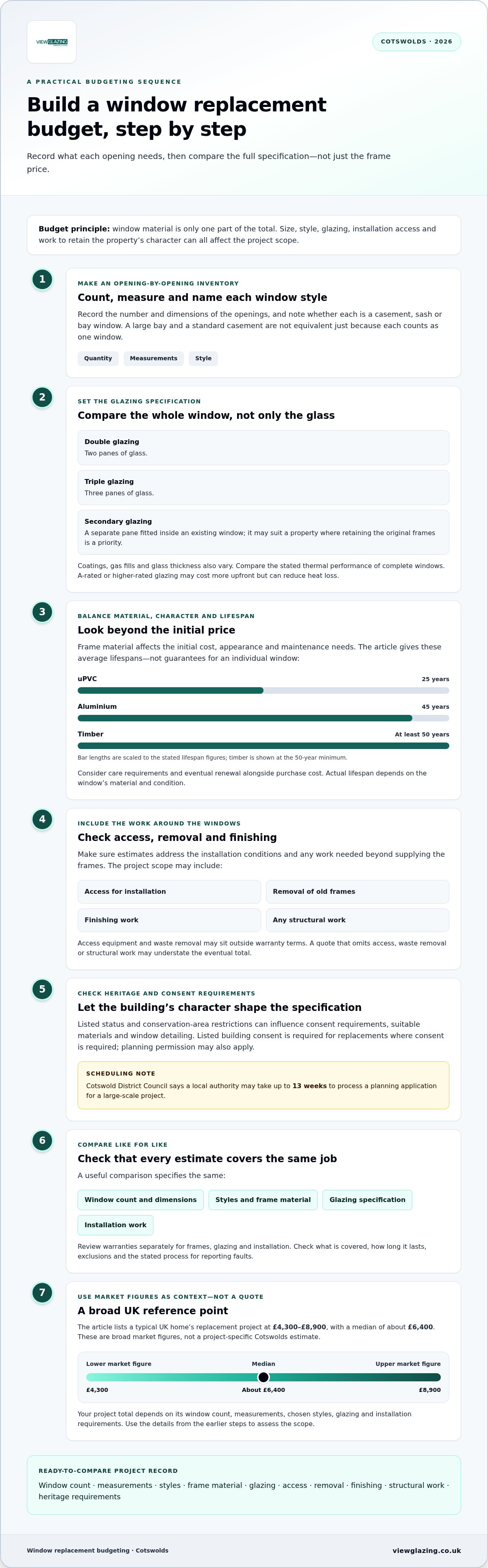
The frame material is only part of the cost of new windows in the Cotswolds in 2026. The final price depends on the size and style of each window, glazing specification, installation access and any work needed to retain the character of the property. Listed buildings require listed building consent for window replacements where consent is required.
It’s understandable to want a clear budget before choosing a design, particularly when the right windows need to balance comfort, appearance and the building’s character. This guide explains how the main cost factors affect a replacement project and what to include when planning your budget.
You’ll also learn when planning permission or listed building consent may apply, and how heritage requirements can shape the materials and details you choose. Understanding these factors helps you assess the project scope before requesting a quote.
Table of Contents
What is the average double-glazing cost in the UK?
There isn’t one average cost that fits every home. Window design, dimensions, glazing and installation requirements all affect the total. In the Cotswolds, heritage considerations can also influence the specification and project timeline.
Average prices by window type
Window-type estimates show how design and construction affect replacement costs. Casement, sash and bay windows have different frame layouts, dimensions and fitting requirements, so a single average can hide important differences.
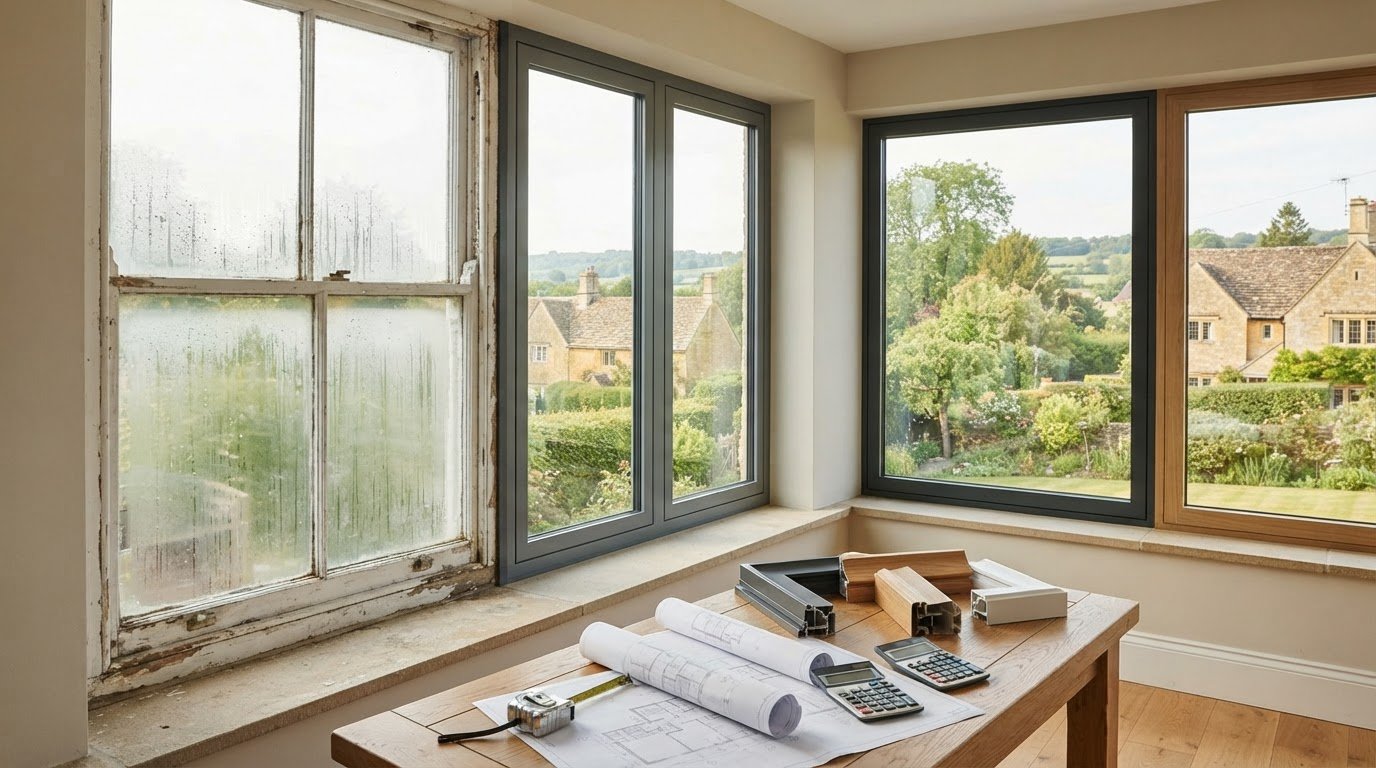
For a useful comparison, measure each opening and record its style before reviewing estimates. A like-for-like comparison should specify the number and dimensions of windows, frame material, glazing and installation work. A large bay differs from a standard casement, so counting each simply as “one window” can make a budget misleading.
Comparing glazing options
Double glazing uses two panes, triple glazing uses three, and secondary glazing adds a separate pane inside an existing window. The right option depends on the building, the desired thermal performance and whether you want to retain the original frames.
Glazing specifications also vary by coatings, gas fills and glass thickness. These details affect heat transfer and the overall specification, so compare the stated thermal performance of complete windows, not just the glass. A-rated or higher-rated glazing may cost more upfront but can reduce heat loss. The right balance between initial cost and energy performance depends on the property and its requirements.
Cotswolds replacement costs
For the Cotswolds in 2026, the average replacement cost depends on the home’s window count, measurements, chosen styles and installation conditions. A typical UK home’s replacement project is listed on the market at £4,300 to £8,900, with a median of about £6,400. Treat this as broad market context, not a project-specific quote.
Access, removal of old frames, finishing work and any heritage requirements can alter the scope. Cotswold District Council says a local authority may take up to 13 weeks to process a planning application for a large-scale project, which can affect scheduling.
What is the average cost to replace windows in the Cotswolds in 2026? The market range for a typical UK home is £4,300 to £8,900, with a median of about £6,400. A Cotswolds project’s total depends on its window types, measurements, glazing choices and installation requirements.
Are grants or schemes available to help pay for new windows in the UK in 2026? Eligible Scottish homeowners upgrading from single glazing may qualify for a Home Energy Scotland loan of up to £8,000, or £9,500 in remote or rural areas. This Scottish scheme does not apply to Cotswolds homeowners, and the available facts do not establish a general window-replacement grant for England.
Secondary glazing may suit properties where retaining existing windows is a priority, while double or triple glazing involves replacing or upgrading the main window system. Compare thermal performance and how existing frames will be treated alongside the initial project cost. For listed or older properties, consent requirements may also affect which option is appropriate.
What Affects the Cost of Replacing Windows?
Frame material, window dimensions and access for installation all influence the cost of a replacement.
Size, style and quantity affect the total. A larger opening needs more material, while a bay or sash design has different construction and fitting requirements. Replacing several windows also changes the project scope, including removal and installation work.
When reviewing warranties, check what the terms cover, how long the coverage lasts and which exclusions apply. Look separately at coverage for frames, glazing and installation, and understand the stated process for reporting faults.
Lifetime costs and maintenance
Lifetime cost combines the initial replacement price with maintenance and eventual renewal, making frame lifespan relevant to long-term budgeting. Aluminium frames have an average lifespan of 45 years, compared with 25 years for uPVC; timber frames can last at least 50 years.
Those figures are averages, not a guarantee for an individual window. Maintenance needs depend on material and condition, so consider care requirements alongside the purchase cost. A lower initial estimate may not represent the same long-term value if materials, upkeep and expected service life differ.
Whole-house costs by property type
The total cost for a whole house combines the price of each window with the work required to replace it.
That example shows how a property’s style and window design can change the project total. Compare it with the actual number and type of openings in your home, rather than relying on bedroom count alone.
Frame materials and timber alternatives
Frame material affects both the initial cost and the character of a replacement.
Compare materials against the property’s appearance, maintenance needs and desired thermal performance, not price alone.
Warranties and purchase risks
Warranty terms describe the protection that comes with a window purchase and installation. Understanding them helps clarify responsibility if a fault arises. Review which components are covered, the duration, exclusions and any conditions for making a claim.
Some project costs sit outside warranty terms. A quote that omits access equipment, waste removal or structural work may understate the eventual total.
To build a project-specific estimate, set out the window count, sizes, styles, materials and access requirements. You can discuss your window project with those details in hand.
Planning New Windows or Doors in 2026?
For older homes, the window specification and installation method need to suit the building as well as the opening. Accurate measurements, attention to heritage details and a complete quote help clarify the project scope and timing.
The installed cost of double glazing per window depends on dimensions, frame material, glazing and access. The project price reflects the individual specification and is provided in a quote.
To compare quotes, check that each covers the same window sizes, glazing, labour, removal, waste and access equipment. Ask whether structural work is included, as exclusions can change the final project total.
Requirements for older and heritage properties
For older and heritage properties, installation requirements include design and fitting considerations that preserve the building’s character. Replacement frames and glazing details can alter the appearance of a historic elevation.
For listed buildings, replacement windows are expected to use traditional through glazing bars, rather than applied or plant-on bars or lead cames. Existing frames may also be worth assessing for retention, particularly where only the glazing needs attention. Replacement windows are controlled fittings under the Building Regulations, according to the Ministry of Housing, Communities and Local Government.
Installed prices by window type and material
An installed price combines the window specification with the work needed to fit it, so like-for-like comparisons matter. Casement windows, sash designs and large bays involve different frame layouts, measurements and installation requirements.
Material also affects the specification: timber and aluminium frames differ in construction, while a bespoke size may require a made-to-measure unit. Quotes often bundle labour, materials and fittings into a contract price. Check whether removal, waste disposal, scaffolding and structural work are included, rather than comparing headline totals alone.
Manufacturing and installation times
Manufacturing lead time is the period between confirming an order and the windows being ready; installation time is the work carried out on site. Both affect the progress of a renovation project.
A typical manufacturing lead time is 4-6 weeks after an order is confirmed. A full-house replacement involving 10-14 windows typically takes 2-3 days, depending on access and complexity. Older properties may need careful coordination between measurements, heritage details and fitting, so include these stages when planning other work around the installation.
Supply-only and installation options
Supply-only means the windows arrive without fitting; supply-and-install includes installation. The distinction matters because a product-only figure cannot be compared directly with the cost of a complete fitted project.
For supply-and-install, establish whether the quote includes removing existing frames, waste handling, access equipment and finishing. Upper-floor work may require scaffolding, while a deteriorated bay support can involve structural work. A written breakdown makes exclusions easier to spot and helps ensure quotes cover the same project scope.
Once the window count, measurements and access needs are clear, request a project quote to discuss the scope and specification.
Replacement window budgeting for a three-bedroom home
A three-bedroom home’s budget depends on the number of openings, window design and installation scope. A Cotswolds estimate should reflect the actual windows, not bedroom numbers alone.
These examples show how window count and project specification shape the total. They’re useful starting points, but homeowners should compare them with the openings in their own homes.
Build a project schedule by listing each opening, its dimensions, current frame and proposed design. Separate standard casements from larger or shaped windows, then include removal, installation, waste and any access equipment. This makes it easier to compare the same scope across estimates and identify work that might otherwise be overlooked.
Double glazing can also affect household energy use. The average UK home can save £235 every year with double glazing. Actual savings relate to the property and its existing windows, so consider this figure alongside the initial replacement budget and the home’s current heat loss.
Where a planning application needs replacement-window drawings, elevations and cross-sections should be prepared at a scale of 1:5. That scale lets the application show the proposed frame and opening clearly. Include the window’s design and dimensions consistently, so the drawings correspond with the specification being costed.
Materials and design choices
Material and design choices determine the appearance, construction and specification of each replacement window. They matter because a three-bedroom home may have a mix of openings, rather than one uniform design throughout.
Compare timber, aluminium and composite options against the property’s architecture and the intended finish. Consider whether each opening calls for a casement, sash or bay design, and record any colour or glazing preferences. Non-standard colours or woodgrain foils can add 10-15% to a typical whole-house replacement cost, making the finish an important budget decision.
For period homes, drawings may help show the proposed frame details in relation to the opening. Matching the design to the building keeps the specification part of the wider project, rather than leaving it as a late change.
VAT on residential replacements
VAT is a tax added to the cost of residential window replacement, so including it helps homeowners plan the full amount. Standard window replacement on an occupied residential property in the UK is subject to VAT at 20%.
Check whether the estimate includes VAT, then compare final totals rather than pre-tax figures. For example, assess an eight-window project against its complete fitted scope, including materials, labour and VAT. A clear breakdown helps show how the quoted amount relates to the windows and work specified.
Listed Building Consent and planning permission
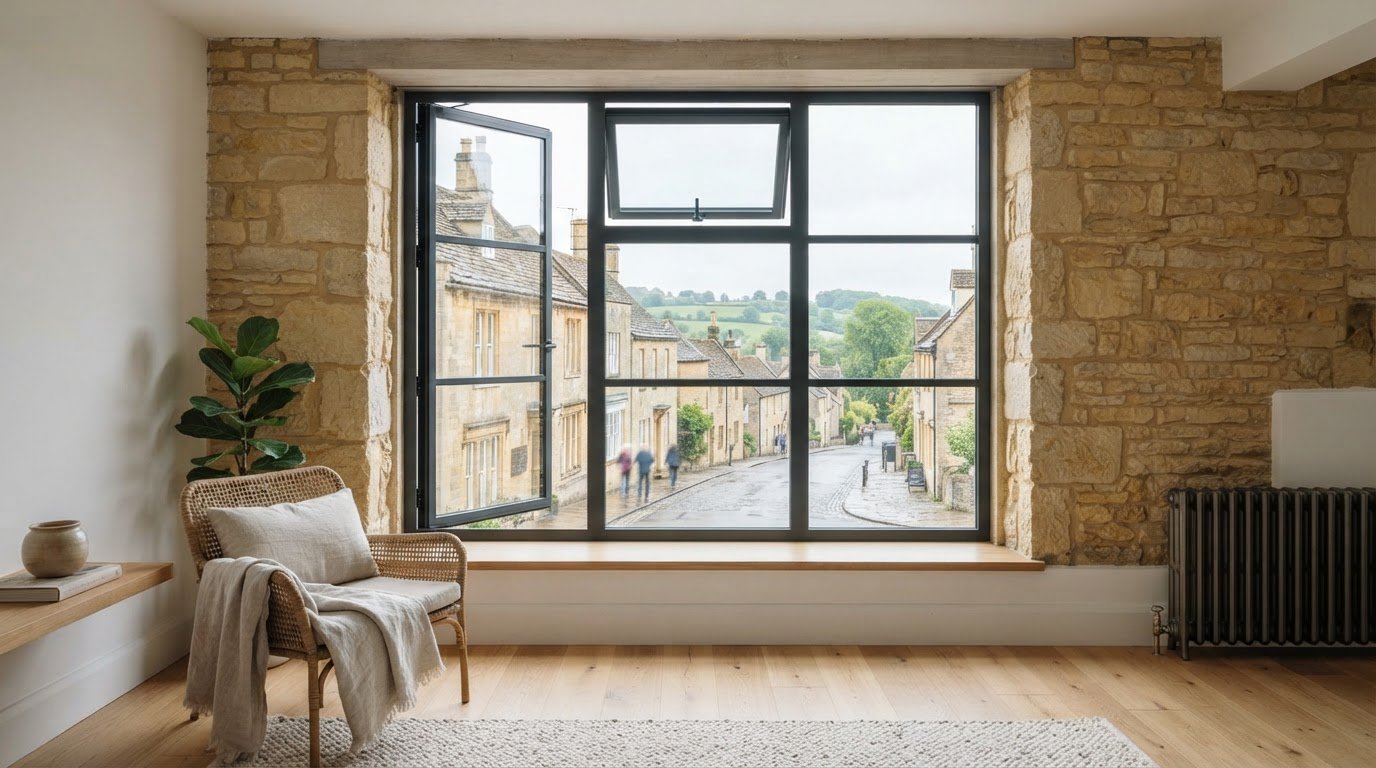
Replacing windows in the Cotswolds can involve heritage controls as well as decisions about materials and appearance. Whether consent or planning permission applies depends on the building’s status and location.
Local heritage considerations
Heritage considerations include the features and details that help a building retain its architectural character. A replacement window can change the appearance of a historic elevation, even when the opening stays the same.
Window replacement in a listed building requires listed building consent where consent applies. Owners in the Cotswold District must apply before replacing windows when consent is required. Existing historic windows should be repaired and overhauled before replacement is considered. Cotswold District Council guidance recommends investigating whether the frame can remain while only the glass is replaced.
Where replacement is proposed, traditional detailing matters. Listed-building windows are expected to have flush rather than storm-proof detailing, and traditional through-glazing bars rather than applied or plant-on bars or lead cames. These requirements can affect the specification, so consider them before settling on a design or budget.
Planning in conservation areas
Conservation-area controls protect the character of a wider neighbourhood, rather than focusing only on an individually listed building. They matter because a change that might be straightforward elsewhere could face restrictions depending on the property’s setting and the proposed design.
In UK conservation areas, planning restrictions may require timber frames, traditional sash designs or approval before installation. Material, opening style and visible details can all influence the project. Don’t assume that uPVC or aluminium windows will suit every conservation-area property; the applicable restrictions and building context shape what can be proposed.
Planning permission and listed building consent are separate considerations. A conservation-area location may bring planning controls, while listed status can require listed building consent for replacement windows. Establish the property’s status and the requirements for the proposed work before finalising the specification. If an application is needed, allow time for its preparation and decision before arranging installation.
For listed buildings, slim-line double glazing may be a replacement option: Cotswold District Council guidance describes units with a thickness of 6-14 mm. That option does not remove the need to consider the existing frame, glazing bars and overall appearance. A design that respects those details can make the application and specification more coherent.
If your project involves a heritage property, discuss your window requirements before finalising the proposed design.
View Glazing: VELFAC Composite Windows
View Glazing helps homeowners move from window selection to a specified, professionally installed project. Its service includes surveying, sourcing and specification, helping match the choice of windows to the property’s design and requirements.
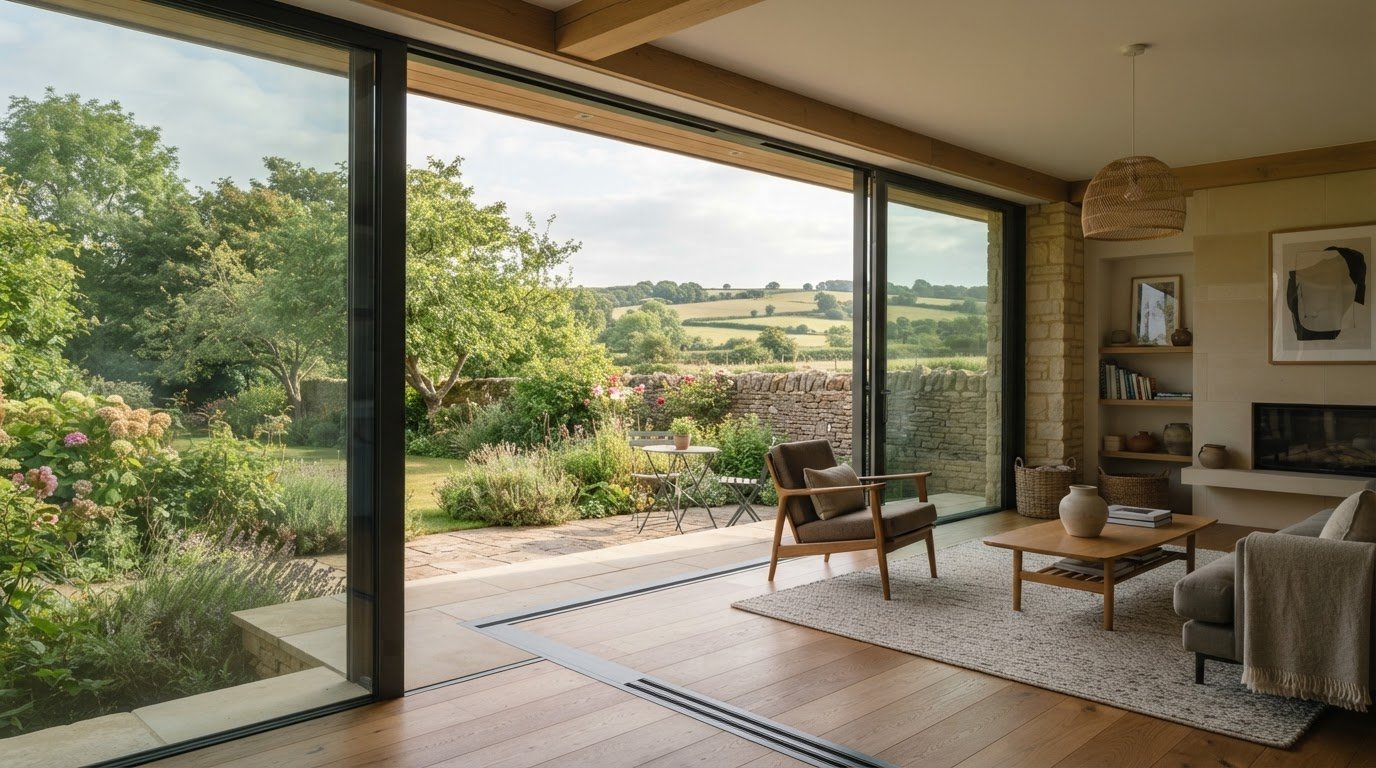
VELFAC Composite Windows are one option to consider alongside Rationel Timber Windows. For projects that also include other glazing, View Glazing supplies Cortizo Aluminium Sliding Doors and Brett Martin Rooflights. The right combination depends on the building, the openings and the intended design.
When you’re ready to discuss measurements, materials and installation as one coordinated scope, turn to View Glazing. Contact the team to talk through your replacement project.
Turn your window plans into a clear brief
Planning for the cost of new windows in the Cotswolds in 2026 starts with deciding what each room needs from its windows. Natural light, ventilation, privacy and the view can all shape your priorities, so note which matters most in each space.
Create a room-by-room brief before discussing the project. Record each opening, preferred operation, appearance and practical concerns, such as nearby furniture or limited outside access. Photographs of the interior and exterior can show the existing character and context. For a period home, note details you want to retain, such as glazing-bar proportions or the visual rhythm across the façade.
These priorities give the design conversation a useful starting point. They also keep aesthetic choices connected to how you use your home. As you refine the cost of new windows in the Cotswolds in 2026, a clear brief helps focus decisions on the features that matter most to you.
Contact View Glazing to discuss your project and take the next step towards windows that feel right for your home.
Frequently Asked Questions
Are Installation Costs Included?
Installation is included in a supply-and-install quote, but not in a supply-only price. UK double-glazing quotes often bundle labour, materials and fittings into one contract total. Check whether removal of existing windows, waste disposal, scaffolding and making good are included too. For example, an upstairs bedroom window may need access equipment, while a ground-floor opening may not. Comparing itemised scopes helps reveal differences between quotes.
New windows vs restoration: which costs more?
Neither option always costs more; the condition of the existing frame and the work required are decisive. Restoration may involve repairing and overhauling original windows, while replacement means new frames and installation. For historic properties, Cotswold District Council guidance recommends investigating whether the existing frame can be retained and only the glass replaced. Compare the proposed work, materials and finishing requirements before deciding which approach suits the building.
How much do uPVC, timber and aluminium windows cost in the UK in 2026?
Timber and aluminium costs depend on dimensions, design, glazing and installation scope, so compare estimates based on the same specification. A sash window, standard casement and large bay are not equivalent items. Include frame finish and any heritage details in the comparison, as these can change the design requirements.
What are typical labour and window removal costs in the Cotswolds?
There isn’t one labour or removal charge for every Cotswolds project. Installation time and effort depend on window quantity, access, frame condition and the complexity of the openings. Quotes may bundle labour into the full contract, so check whether removal and disposal of old windows are included. Upper-floor access or structural repairs can add work beyond straightforward fitting, and should be identified separately in the project scope.
Do listed buildings or conservation areas in the Cotswolds need planning permission for replacement windows?
Listed building consent is required for window replacement in listed buildings where consent applies. Conservation-area restrictions may require timber frames, traditional sash designs or approval before installation. Requirements depend on the property’s status and the proposed changes, so distinguish listed building consent from planning permission. Changing the frame material or visible glazing-bar details, for example, may affect the proposal. Establish which controls apply before finalising the window design or installation plans.
What building regulations and energy-efficiency requirements apply to replacement windows in England in 2026?
Replacement windows are controlled fittings under the Building Regulations, according to the Ministry of Housing, Communities and Local Government. In England, Approved Document L sets a maximum whole-window U-value of 1.6 W/m²K for replacement windows, in the current edition incorporating the 2023 amendments. Compare the whole-window performance, which includes the frame, rather than relying only on a glass rating. The chosen installation must meet the applicable requirements.
How much does triple glazing cost compared with double glazing?
Triple glazing typically adds around 20-30% to the window unit cost compared with double glazing.
Comments